'...Marion Sugden, whose house it was, produced a cigarette pack from her bag; the cigarette she put into her mouth was the last, and she threw the empty packet with its pulled-out silver foil and tissue-paper on to the grass, chucking it as far as she could, for naturally she did not want the litter just outside her own front gate. The weightless object dropped too near for her satisfaction, and she took a step after it, scuffing it with her toe a little farther off.'
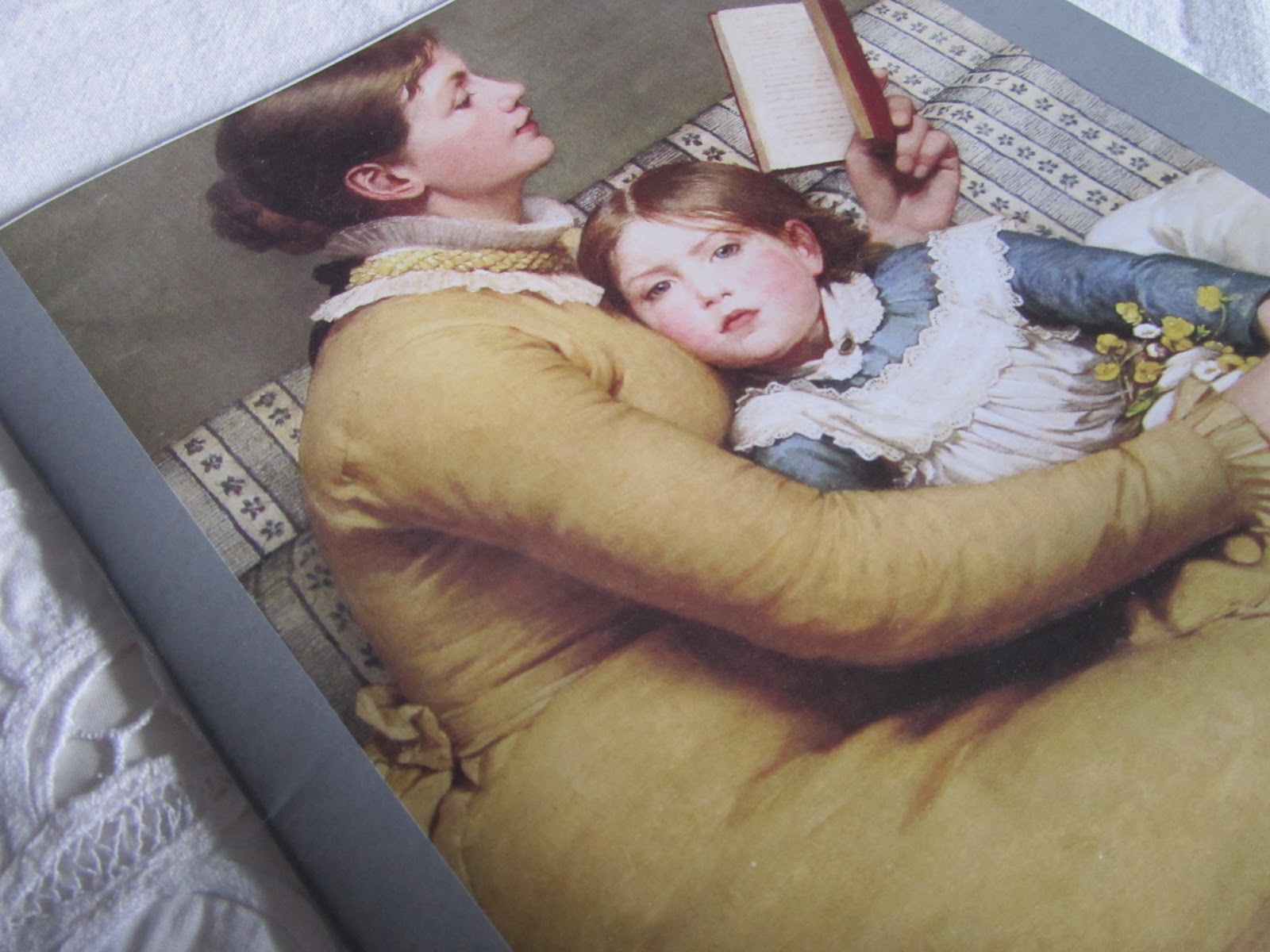
Persephone Books has just reprinted Elizabeth Jenkins' book Harriet which I look forward to reading but in the meantime it is another of her books which has been occupying my time. After stumbling upon a gorgeous black Virago edition of The Tortoise and the Hare two years ago and quickly becoming a fan of Jenkins' style of writing, I went back and scooped up Brightness for 75¢. It's worth ten times that amount and then some.
Una Lambert lives in wind-swept New Broadlands with her son, Richard, just out of his teens. Her husband drowned while serving as a naval officer barely two years into their marriage leaving her a young widow. Raising her son while being useful to her neighbours and community keeps Una from feeling lonely. She could not be more opposite in values to Marion Sugden whose family is very much part of the 'nouveau riche' set. The local women who work part-time at the Sugden's house as domestics barely lift a finger as every mod-con in production make housework a breeze. Their son, Derek, is nineteen years old and despite his father wanting him to make his mark on the family business he is not interested in anything which doesn't revolve around sports cars, flash clothes, women and himself. I haven't run into such a narcissistic dynamic duo in literature as this mother and son in quite some time.
For the first three-quarters of the book the reader is immersed in the day-to-day events surrounding the Sugden and Lambert families. Richard is beyond his years in accepting the Sugden's for what they are and through his words of wisdom and saintly guidance, Una, bears news of vacation plans and posh purchases with resolve. One indulgence too many though brings about an horrific event that shatters these two families (note: tissues) and presents a dilemma to citizens within the community. One voice in particular campaigns for justice and vows to stop at nothing until it is served.
If you thoroughly enjoyed Jenkins' The Tortoise and the Hare it is a cut above Brightness but the experience is still a richly satisying one so don't hesitate to pick it up...if you can find it.
Showing posts with label Persephone. Show all posts
Tuesday, April 10, 2012
Wednesday, January 18, 2012
A Very Great Profession by Nicola Beauman
It was approximately four years ago that my first Persephone catalogue arrived in the mail. Flipping through its pages there were only a handful of titles I recognized. As someone who desperately wished to pursue higher education but was thwarted by parents who refused to entertain the idea, there were themes within these works that I gravitated towards. Women who thought they were worth more than they were given but made the best of things. But that internal struggle with 'is this all there is for me?' is ever present. There are days when I would give anything to work eighteen hours a day for a museum and days when it's lovely to clean the house all morning and bake all afternoon. Which isn't to say that some men don't have the same daydream but today this post is about a woman's perspective.Through passages from interwar novels written by women, Nicola, brilliantly points out the way things are, the frustration which sometimes accompanies these situations, social mores from that era and what authors had to say about it. From Dorothy Whipple's The Priory.
'Well, this has taught me one thing,' she thought wearily, picking up another paper and turning to the advertisment columns. 'If I've to scrub floors or eat the bread of dependence all my life, Angela shall be educated to earn her own living. She shan't find herself in the hole I'm in now if I can help it.'
Dorothy Whipple picked up her pen in the thirties and expressed the thoughts I had, and still have, over sixty years later. While I may not be in 'the hole', the lack of faith from my parents to be anything other than someone's wife and mother is something I'll never come to grips with. The Heiress, poor thing, never stood a chance, for her university was never about 'if'. Regardless of whatever comes from her degrees or the hours her parents have toiled to pay their cost, we never want her to doubt our faith in her ability. But despite the strides made by women in society, she may yet experience prejudice against her sex in the job market due to the prospect of fertility.
In fascinating chapters such as War, Feminism, Sex, Psychoanalysis, Beauman highlights sections illustrating those aspects from works by various authors. In my favourite chapter, Domesticity, she points to a hilarious section from the Diaries of Cynthia Asquith.
'Eddie told a very good child story, about a dog called Paddy run over by motor and killed. Mother hardly dared break the news to child. Did so during pudding. To her intense relief, after a second's pause, the child calmly continued pudding. Later mother heard crying, and found child with absolutely tear-congealed face.
'Oh Mummie, Paddy's killed.'
Mother: 'Yes, but I told you that at lunch,darling.'
Child: 'Oh, I thought you said it was Daddy!'
A Very Great Profession is a book to be revisited many times as my knowledge of women writers from the interwar period increases. I'm quite proud of the education I've received through reading my favourite book blogs, as well as novels published by Virago and Persephone, which meant I could relate to quite a lot of what Nicola was writing about. But there is still lots of reading to be done and to expand my horizons even further she has piqued my interest in May Sinclair, Vita Sackville-West, Rose Macaulay and F. M. Mayor.
The afterword in which Nicola writes more personally about her research and plans for this book are touchingly honest.
'So it was these chapters that went off, in the late summer of 1972, to Barley's reader. His report was crushing. I cannot actually say that I was devastated because I cannot remember how I felt: I think the energy went out of me, that the criticisms, destructive rather than constructive, just made me not want to bother. I simply stopped. His report arrived on 23rd November. My third baby was born on 31st August next year. The arithmetic is neat. And what it reveals about psychology.'
That passage reduced me to tears but I am so glad Nicola Beauman persevered. Not just to publish a book which is both delightful and informative but to create a publishing company, Persephone Books. An incredible and much appreciated bright spot in my reading world.
Monday, November 7, 2011
Muses for Monday
The arrival of the latest issue of the Persephone Biannually is always cause for great joy. Knowing that it's on its way is to check the mailbox with childlike enthusiasm. The current issue is particularly wonderful with short stories by two of my favourites, Dorothy Whipple and Mollie Panter-Downes. There is always a piece of artwork that catches my eye and whose heart doesn't leap for a favourite blogger when their quote appears?
The magazine section of the bookstore has lost some its appeal for me. I can't bear to read about mascara application as if it were a science, I'm cynical about ads for wrinkle cream featuring twenty year-olds and articles about the rapist living next door...no thanks. And yet people pay lots of money every month for these glossy pages and my past experience is that quite a lot of it is simply flipped through. Don't get me wrong, there are times when that's all you want, for instance at the dentist's office. But I am one of those people who apparently can't carry around enough guilt and feel a bit as though I'm stealing from Persephone. There is so much to sink your teeth into with the Biannually and it's free. It must cost quite a bit to produce and mail out so I for one would not be opposed to a subscription rate to help fund it.
And....listening to a podcast featuring James May this morning, he mentioned that he has been debating with his father for forty years about milk versus tea in the cup first. James puts the milk in first and so do I. And even though I feel righteous when buying loose leaf tea, I get lazy and end up plopping a bag into the pot...without warming it first. Tsk, tsk. What's your tea ritual?
The magazine section of the bookstore has lost some its appeal for me. I can't bear to read about mascara application as if it were a science, I'm cynical about ads for wrinkle cream featuring twenty year-olds and articles about the rapist living next door...no thanks. And yet people pay lots of money every month for these glossy pages and my past experience is that quite a lot of it is simply flipped through. Don't get me wrong, there are times when that's all you want, for instance at the dentist's office. But I am one of those people who apparently can't carry around enough guilt and feel a bit as though I'm stealing from Persephone. There is so much to sink your teeth into with the Biannually and it's free. It must cost quite a bit to produce and mail out so I for one would not be opposed to a subscription rate to help fund it.
And....listening to a podcast featuring James May this morning, he mentioned that he has been debating with his father for forty years about milk versus tea in the cup first. James puts the milk in first and so do I. And even though I feel righteous when buying loose leaf tea, I get lazy and end up plopping a bag into the pot...without warming it first. Tsk, tsk. What's your tea ritual?
Saturday, October 15, 2011
The Carlyles at Home by Thea Holme
"One day Fanny Kemble the actress 'bolted in' to see Carlyle. Jane did not take to her: 'she is Green-room all over, and with a heart all tossed up into blank verse...The longer I live, the more I want naturalness in people.' On this occassion the actress was dressed in a riding habit and flourishing a whip--'but no shadow of a horse,' said Jane drily, 'only a carriage, the whip, I suppose, being to whip the cushions with, for the purpose of keeping her hand in practice'."
With that paragraph from The Carlyles at Home I was keen to discover more about the lady behind the tired eyes and simple dress. Her husband may have been hugely popular amongst other eminent Victorians of the day such as Dickens and Darwin but there is no doubt about who steals the story in Thea Holme's book. Jane's battle with illness, her dependancy upon opiates, being a clever woman in a man's world and oh, that wit. I couldn't get enough of reading whatever it was she had to say!
Going about things completely backwards, I visited 24 Cheyne Row knowing nothing at all about Thomas and Jane. Eyeing the details in the house I could have been viewing a potential home to purchase for all I knew about its former occupants. The rooms were cosy and the stairs creaked in a charming way. But when I started reading The Carlyles at Home I was thrilled to be able to visualize Thomas in his study, Jane in her bed, maid-of-all-work, Helen, staggering drunkenly around the kitchen and Nero curled up on the sofa.
When the Carlyles took possession of their home in 1834, Chelsea was hardly desirable. The street was full of the sound of horse hooves and carriages, vendors peddling wares, cocks crowing, and spectators gathering to listen to organ grinders. And the Thames, which was just a short stroll away, stank. The rent was a bargain though and being Scottish, Thomas and Jane were willing to put up with such things for the value. And this was a sentiment they repeated about themselves quite often.
This book works well as an introduction to this famous couple and their writings but also as a social history of the Victorian era. I was fascinated by how Jane dealt with a long string of domestic help. Some became a great comfort to her when she was bedridden with her terrible headaches and others were not to be trusted. Jane's refusal to wear a corset went against the fashion of the day and she quite happily ran errands at times without a bonnet on her head. Evidence of bedbugs was cause to send bed curtains to be boiled and for carpenters to disassemble bed frames. Mealtimes and indigestion were frequent topics of conversation between man and wife. To read the letter that Jane wrote to Thomas justifying the increase in her household spending is, well, I could have cheered for her.
The Carlyles at Home is my thirty-fifth Persephone title. I bought it with no expectation other than as a reminder of a day out in Chelsea, hoping it would be somewhat of an extension of my tour around the house. It has turned out to be so much more than that and I can honestly say that it is now firmly one of my favourite Persephone titles.
With that paragraph from The Carlyles at Home I was keen to discover more about the lady behind the tired eyes and simple dress. Her husband may have been hugely popular amongst other eminent Victorians of the day such as Dickens and Darwin but there is no doubt about who steals the story in Thea Holme's book. Jane's battle with illness, her dependancy upon opiates, being a clever woman in a man's world and oh, that wit. I couldn't get enough of reading whatever it was she had to say!
Going about things completely backwards, I visited 24 Cheyne Row knowing nothing at all about Thomas and Jane. Eyeing the details in the house I could have been viewing a potential home to purchase for all I knew about its former occupants. The rooms were cosy and the stairs creaked in a charming way. But when I started reading The Carlyles at Home I was thrilled to be able to visualize Thomas in his study, Jane in her bed, maid-of-all-work, Helen, staggering drunkenly around the kitchen and Nero curled up on the sofa.
When the Carlyles took possession of their home in 1834, Chelsea was hardly desirable. The street was full of the sound of horse hooves and carriages, vendors peddling wares, cocks crowing, and spectators gathering to listen to organ grinders. And the Thames, which was just a short stroll away, stank. The rent was a bargain though and being Scottish, Thomas and Jane were willing to put up with such things for the value. And this was a sentiment they repeated about themselves quite often.
This book works well as an introduction to this famous couple and their writings but also as a social history of the Victorian era. I was fascinated by how Jane dealt with a long string of domestic help. Some became a great comfort to her when she was bedridden with her terrible headaches and others were not to be trusted. Jane's refusal to wear a corset went against the fashion of the day and she quite happily ran errands at times without a bonnet on her head. Evidence of bedbugs was cause to send bed curtains to be boiled and for carpenters to disassemble bed frames. Mealtimes and indigestion were frequent topics of conversation between man and wife. To read the letter that Jane wrote to Thomas justifying the increase in her household spending is, well, I could have cheered for her.
The Carlyles at Home is my thirty-fifth Persephone title. I bought it with no expectation other than as a reminder of a day out in Chelsea, hoping it would be somewhat of an extension of my tour around the house. It has turned out to be so much more than that and I can honestly say that it is now firmly one of my favourite Persephone titles.
Tuesday, June 14, 2011
They Knew Mr Knight by Dorothy Whipple
"Mr Knight smiled to himself. Five hundred a year! And they sat down with it, these men. They put up with it. And the world was full of money. They never even put out a hand towards it. Poor chaps, they'd no guts or no wits, he didn't know which it was. Mr Knight pulled down his waistcoat and settled himself more comfortably in his comfortable seat."
Oh the delight of a Dorothy Whipple novel! As cosy as a rainy Saturday afternoon spent watching a nostalgic film cuddled up in your favourite comfy sweater.
The Blakes are a typical family with the usual concerns about making ends meet. Their three children are on the verge of adulthood and have their own ideas about the future. Freda is a snob, Douglas lives to create science experiments and Ruth is a bit of a mess but does has an affection for writing. There is also Uncle Edward who embarrasses the family with his inability to hold down a job due to problems with alcohol and laziness.
Poor Thomas Blake works day in and day out to earn enough money to provide for everyone, even his mother who hates to say thank you. Things could have been so different if his father had been a better businessman but now Thomas is 'a servant where he should have been master'.
Oh the delight of a Dorothy Whipple novel! As cosy as a rainy Saturday afternoon spent watching a nostalgic film cuddled up in your favourite comfy sweater.The Blakes are a typical family with the usual concerns about making ends meet. Their three children are on the verge of adulthood and have their own ideas about the future. Freda is a snob, Douglas lives to create science experiments and Ruth is a bit of a mess but does has an affection for writing. There is also Uncle Edward who embarrasses the family with his inability to hold down a job due to problems with alcohol and laziness.
Poor Thomas Blake works day in and day out to earn enough money to provide for everyone, even his mother who hates to say thank you. Things could have been so different if his father had been a better businessman but now Thomas is 'a servant where he should have been master'.
A chance encounter with Mr Knight, a wealthy financier, presents an opportunity for Thomas to step up in the world and he grabs it eagerly. His daughter, Freda, is thrilled to be able to socialize with the richer set and can finally allow her snobbery to reach its full potential. The oh-so sophisticated Mrs Knight kindly offers to show Freda around the best shops and even takes her to get a permanent wave against her mother's wishes. The resulting scene is unforgettable and why I chose a related image for this post.
As the Blakes wealth increases, those left behind can't resist making comments about the high and mighty. None more so than Mrs Greene, the quintessential net-flicker with a penchant for the negative. And as Thomas spends more time with Mr Knight, Celia wonders if she has been a poor replacement for the men's club all these years. Right on schedule, Uncle Edward turns up demanding an opportunity now that the Blake name is back over the factory door. I couldn't help but enjoy the mortification of the family when Edward resorts to a form of blackmail in order to secure a position. If he is refused a job at the factory then he will have to apply to a vacancy in staffing at the Knight's residence. Can you imagine the shame!?
As any fan of Whipple knows, her characterization is excellent. In my humble opinion, in They Knew Mr Knight it is sublime. Pin down an opinion of a character and then ask yourself a few chapters further along if you feel the same way. How she does it without being even remotely unsettling is quite fascinating when you think about it. Waiting to discover whether Mr Knight is either scoundrel or saviour certainly kept me riveted throughout.
During the climax of the story I was pouring tea with one hand whilst not taking my eyes off of the page, trusting my ear to tell me when the cup was full. The sign of a good book I'd say.
Saturday, June 4, 2011
The New House by Lettice Cooper
"To-day, she thought, is like a crack in my life. Things are coming up through the crack, and, if I don't look at them, perhaps I shall never see them again. Ordinary life in the new house will begin to-morrow and grow over the crack and seal it up."
A story about a family on moving day sounds so appealing doesn't it? I could just picture the china being packed up, smiling faces navigating through hallways full of boxes and everyone dishing up stories about the past. The New House is sort of like that but there is also a few black clouds and unfortunately most of the characters just didn't appeal to me.
This book was shelved not once but twice because it just wasn't the story I was hoping for but retrieved fairly quickly both times. That Persephone-grey cover is my assurance that something wonderful lies between the endpapers so I was determined to see things through. Wondering how others had got on with The New House I searched for some reviews and found a kindred spirit in Simon from Savidge Reads. His review is eerily bang-on to my sentiments so pardon me for taking the easy route and click here.Interestingly, the ending of The New House was lovely so all is not lost and perhaps another read down the road may be more encouraging.
Endpaper design - "Rope and Dandelion" by Margaret Culkin, 1936
Wednesday, May 18, 2011
The Other Elizabeth Taylor by Nicola Beauman
During the summer of 2008, I stood in a bookshop skimming through the beautiful cloth-bound reissues of several books published by Virago. Reading a few lines here and there of A Game of Hide and Seek it was placed back on the shelf and I purchased a copy of Diary of a Provincial Lady by EM Delafield instead. One year later I came to read In a Summer Season by Elizabeth Taylor and realized that this was an author who stood apart for me and the collecting of her other novels began.
It was the afterword in Blaming in which Taylor's daughter, Joanna, wrote how her mother had included some humourous dialogue from when she was a child that made me want to know more about the sort of woman Taylor was at home. Ironically, Elizabeth Taylor's children were not pleased with Beauman writing about their mother. However, I am very glad that she did.
I couldn't have asked for a more perfect resource to find out more about an author I have come to admire. The quality that strikes me most is how ordinary this author's life was as a mother struggling to find uninterrupted time to write while her children were at school or asleep. Loving the countryside and eschewing a materialistic lifestyle, Taylor wrote from her domestic surroundings in Buckinghamshire rather than the hustle and bustle of London where she would have been surrounded by many of her contemporaries. Which is not to say that she didn't long for the intellectual stimulation or ponder with frustration that unmarried women authors, or males, could write at their leisure without the interruptions of childcare and housework.
Elizabeth Taylor had very close friendships with Barbara Pym and Elizabeth Bowen. I particularly enjoyed reading about a time when Taylor went to stay with Bowen and they spent their days in separate rooms while they wrote, joining each other later for drinks and conversation. Taylor commented that the air in Bowen's room was so filled with smoke you needed a very sharp knife to cut through it. But I was startled to learn there was a group referred to by Robert Liddell as 'The Lady-Novelists Anti-Elizabeth League', consisting of authors such as Kate O'Brien, Pamela Hansford Johnson, Kathleen Farrell and Olivia Manning, who ridiculed Taylor's work and lifestyle. With a childish sense of relief and loyalty I am happy that none of these authors grace my bookshelves.
One drawback of reading a biography before you've completed an author's oeuvre is that you discover the endings of unread novels. I'm counting on the sort of mental lapse which has me forgetting why I went dashing into a room in the first place on keeping plots fresh for future reads. But how delightful to find out that Elizabeth and her husband, John, had boys to stay with them just as in The Devastating Boys and how sad to learn that Martha's character who ends up committing suicide in Blaming is based on Elizabeth's friend, Maud.
Beauman has done a marvellous job of painting a picture of the Elizabeth Taylor I wanted to know more about. In fact, twice my eyes stung with tears, not at any particularly poignant moment but from the sheer bliss of a fabulous read. Despite some sensational moments in her life the images that stay with me are of a woman quietly sipping tea in a restaurant or something stronger in her local while she takes inspiration from customers for future characters. And of a woman who could paint beautiful scenes with words on paper but was rendered practically speechless by interviewers due to her shyness.
Elizabeth Taylor passed away in 1975, I wish she knew how much I am enjoying her writing and that her books will, hopefully, be in print for many years to come. To Nicola Beauman, thank you for all of your efforts over the fifteen years it took to bring this book to print, it was everything I had hoped for.
It was the afterword in Blaming in which Taylor's daughter, Joanna, wrote how her mother had included some humourous dialogue from when she was a child that made me want to know more about the sort of woman Taylor was at home. Ironically, Elizabeth Taylor's children were not pleased with Beauman writing about their mother. However, I am very glad that she did.
I couldn't have asked for a more perfect resource to find out more about an author I have come to admire. The quality that strikes me most is how ordinary this author's life was as a mother struggling to find uninterrupted time to write while her children were at school or asleep. Loving the countryside and eschewing a materialistic lifestyle, Taylor wrote from her domestic surroundings in Buckinghamshire rather than the hustle and bustle of London where she would have been surrounded by many of her contemporaries. Which is not to say that she didn't long for the intellectual stimulation or ponder with frustration that unmarried women authors, or males, could write at their leisure without the interruptions of childcare and housework.
Elizabeth Taylor had very close friendships with Barbara Pym and Elizabeth Bowen. I particularly enjoyed reading about a time when Taylor went to stay with Bowen and they spent their days in separate rooms while they wrote, joining each other later for drinks and conversation. Taylor commented that the air in Bowen's room was so filled with smoke you needed a very sharp knife to cut through it. But I was startled to learn there was a group referred to by Robert Liddell as 'The Lady-Novelists Anti-Elizabeth League', consisting of authors such as Kate O'Brien, Pamela Hansford Johnson, Kathleen Farrell and Olivia Manning, who ridiculed Taylor's work and lifestyle. With a childish sense of relief and loyalty I am happy that none of these authors grace my bookshelves.
One drawback of reading a biography before you've completed an author's oeuvre is that you discover the endings of unread novels. I'm counting on the sort of mental lapse which has me forgetting why I went dashing into a room in the first place on keeping plots fresh for future reads. But how delightful to find out that Elizabeth and her husband, John, had boys to stay with them just as in The Devastating Boys and how sad to learn that Martha's character who ends up committing suicide in Blaming is based on Elizabeth's friend, Maud.
Beauman has done a marvellous job of painting a picture of the Elizabeth Taylor I wanted to know more about. In fact, twice my eyes stung with tears, not at any particularly poignant moment but from the sheer bliss of a fabulous read. Despite some sensational moments in her life the images that stay with me are of a woman quietly sipping tea in a restaurant or something stronger in her local while she takes inspiration from customers for future characters. And of a woman who could paint beautiful scenes with words on paper but was rendered practically speechless by interviewers due to her shyness.
Elizabeth Taylor passed away in 1975, I wish she knew how much I am enjoying her writing and that her books will, hopefully, be in print for many years to come. To Nicola Beauman, thank you for all of your efforts over the fifteen years it took to bring this book to print, it was everything I had hoped for.
Tuesday, April 12, 2011
The Winds of Heaven by Monica Dickens
'That's all very well for you, Louise thought. You've never had to take things from people, except as your right, as a daughter or a wife. Wait till you're a widow and Ellen offers to buy you a dress, and you want to say yes, but would love to be able to say no.'
Louise Bickford is a widow and judging by the way she was treated by her husband, Dudley, I would say she is better off. But sadly, with very little to live on she is shuttled like a piece of furniture between her three daughters. Miriam and her husband pretend all is well in their magazine-style English existance with their three school-age children. Eva is an actress whose big break is just one play away and then there is Anne, a slattern if ever there was one, living on a small farm with her husband, Frank. There is something very reminiscent of Hyacinth, Daisy and Violet about these three women.
While everyone bustles about in their lives, Louise endures her loneliness as best she can. Stopping into a Lyon's tea room one day, she strikes up a conversation with another man sitting on his own. Gordon Disher works at a department store but for extra money he writes crime novels under the pen name, Lester Drage. There is an immediate affinity between these two lonely people and Louise finds herself offering to read his latest murder mystery and offer an opinion.
This new relationship is scoffed at by her daughters. After all, why would a woman of a certain age need male companionship and if you did, he should at least travel in well-heeled circles, not sell beds in a department store or write trashy novels.
Ellen Chadwick, Miriam's eldest daughter, melted my heart. She doesn't quite fit in at home and is treated harshly by her father thus living in a world where she feels things deeply. Being with her grandmother and Mr Disher fills her heart with delight and thank goodness for that at least. A trip to the markets stalls on Portobello Road where she finds a painting to hang by her bed is written so wonderfully that I am sure I will never forget it.
There were times when I wanted Louise to stop being so polite, to stop placating her spoiled daughters but she desperately needs their support. If the times meant that this was how things were, with no social assistance for women like Louise then I wanted Mr Disher to be her knight in shining armour. He could well have done with the company and a feminine touch in his meagre flat. But you'll have to read the book yourself to find out what happens.
The Winds of Heaven was an enjoyable read, I only wish it went on a bit longer.
Louise Bickford is a widow and judging by the way she was treated by her husband, Dudley, I would say she is better off. But sadly, with very little to live on she is shuttled like a piece of furniture between her three daughters. Miriam and her husband pretend all is well in their magazine-style English existance with their three school-age children. Eva is an actress whose big break is just one play away and then there is Anne, a slattern if ever there was one, living on a small farm with her husband, Frank. There is something very reminiscent of Hyacinth, Daisy and Violet about these three women.
While everyone bustles about in their lives, Louise endures her loneliness as best she can. Stopping into a Lyon's tea room one day, she strikes up a conversation with another man sitting on his own. Gordon Disher works at a department store but for extra money he writes crime novels under the pen name, Lester Drage. There is an immediate affinity between these two lonely people and Louise finds herself offering to read his latest murder mystery and offer an opinion.
This new relationship is scoffed at by her daughters. After all, why would a woman of a certain age need male companionship and if you did, he should at least travel in well-heeled circles, not sell beds in a department store or write trashy novels.
Ellen Chadwick, Miriam's eldest daughter, melted my heart. She doesn't quite fit in at home and is treated harshly by her father thus living in a world where she feels things deeply. Being with her grandmother and Mr Disher fills her heart with delight and thank goodness for that at least. A trip to the markets stalls on Portobello Road where she finds a painting to hang by her bed is written so wonderfully that I am sure I will never forget it.
There were times when I wanted Louise to stop being so polite, to stop placating her spoiled daughters but she desperately needs their support. If the times meant that this was how things were, with no social assistance for women like Louise then I wanted Mr Disher to be her knight in shining armour. He could well have done with the company and a feminine touch in his meagre flat. But you'll have to read the book yourself to find out what happens.
The Winds of Heaven was an enjoyable read, I only wish it went on a bit longer.
Tuesday, March 22, 2011
Queen's Cake
One of the many things I love about reading English novels is the frequent appearance of tea and cake. It's there as a snack, when friends pop 'round, the village fete, a train ride, it rained...the list goes on.
Drawing inspiration from Cornflower, I jotted down the names of a few cakes from South Riding to try. There is Queen's cake, tea cake and currant loaf so far. Since there is a Royal wedding just a flip of the calendar away I wondered what Queen's cake was all about.
Lo and behold, when I did some research the information came from a website featuring none other than Mrs Rundell and her book, A New System of Domestic Cookery. This re-issue by Persephone just happens to be on my shelf! During the Regency era these cakes would have been turned out of their cup and as you can imagine were the beginning of what we now call a cupcake.
The best bit is that they're described as being 'not really a substantial cake' which sounds like an invitation to enjoy more than one. So unless something else tempts me along the way as I'm just three-quarters the way through South Riding, I will be giving this recipe a try. Let's hope I can make Mrs Rundell proud. If I screw things up horribly there is always the hot buttered toast that also gets a mention.
Drawing inspiration from Cornflower, I jotted down the names of a few cakes from South Riding to try. There is Queen's cake, tea cake and currant loaf so far. Since there is a Royal wedding just a flip of the calendar away I wondered what Queen's cake was all about.
Lo and behold, when I did some research the information came from a website featuring none other than Mrs Rundell and her book, A New System of Domestic Cookery. This re-issue by Persephone just happens to be on my shelf! During the Regency era these cakes would have been turned out of their cup and as you can imagine were the beginning of what we now call a cupcake.
The best bit is that they're described as being 'not really a substantial cake' which sounds like an invitation to enjoy more than one. So unless something else tempts me along the way as I'm just three-quarters the way through South Riding, I will be giving this recipe a try. Let's hope I can make Mrs Rundell proud. If I screw things up horribly there is always the hot buttered toast that also gets a mention.
Friday, March 11, 2011
The Shuttle by Frances Hodgson Burnett
American heiresses from Fifth Avenue and English aristocrats from the rolling green countryside reminded me of Downton Abbey so I began to read, The Shuttle. The similarities ended pretty quickly.
The Vanderpoels are rich beyond imagination with two beautiful daughters. Rosalie is described as a 'slim little creature, with quantities of light feathery hair and childlike simpleness'. The younger daughter, Bettina, had abundant glossy dark hair, long legs and an inquisitive mind...as near to the son Mr Vanderpoel wished for but would never have.
The title of the book refers to the many transatlantic crossing which took place during the passenger liner era beginning in the mid-nineteenth century. The vile, Nigel Anstruthers, Lord of the crumbling Stornham Court crosses the Atlantic in hopes of securing an heiress to pay his debts and afford him a living. Rosalie makes an easy target and Anstruthers rubs his hands with despicable glee at her malleable personality.
In no time at all, the new Lady Anstruthers is a shadow of her former self, shrunken from being tormented and bullied. Her fashionable silks are eventually faded and out of date. While she lives as a penniless prisoner, aged beyond her years, with her debilitated son, Ughtred (poor child), the despicable Nigel fulfills his every whim whilst abroad. There are whispers that he keeps the company of women other than his wife.
As Bettina matures, she remembers how uneasy she felt in Anstruthers presence and realizes he is the reason her sister has become a stranger to her family. She sets about a plan to cross the ocean for a visit and to perhaps even rescue her sister. With her fiery spirit and ability to argue any point she stands up to the spoilt Lord Anstruthers in a confident manner which thwarts and frustrates him to no end.
'Her eyes, which were well opened, were quite the blue of steel, and rested directly upon him. 'I, for instance, would let you make a scene with me anywhere you chose - in Bond Street - in Piccadilly - on the steps of Buckingham Palace, as I was getting out of my carriage to attend a drawing-room - and you would gain nothing by it - nothing. You may place entire confidence in that statement.'
Hodgson Burnett wrote this character with passion and it is her powerful heroine that made the story for me. Bettina also possesses a keen social awareness and sets out to restore the village providing work and income to the long-suffering villagers. There is a new respect for Lady Anstruthers who is once again socializing in pretty silks while gaining strength, confidence and spirit.
I would be remiss in not mentioning the wonderfully colourful, G Seldon, who provides comic relief as a travelling typewriter salesman hoping to break into the English market. His catalogue of various makes and models is always close at hand!
This was a brilliant read, sweeping me away with its epic family saga on both sides of the Atlantic. And don't despair, to level things with the grim storyline of a dysfunctional marriage there is also a love story contained in these pages!
The Vanderpoels are rich beyond imagination with two beautiful daughters. Rosalie is described as a 'slim little creature, with quantities of light feathery hair and childlike simpleness'. The younger daughter, Bettina, had abundant glossy dark hair, long legs and an inquisitive mind...as near to the son Mr Vanderpoel wished for but would never have.
The title of the book refers to the many transatlantic crossing which took place during the passenger liner era beginning in the mid-nineteenth century. The vile, Nigel Anstruthers, Lord of the crumbling Stornham Court crosses the Atlantic in hopes of securing an heiress to pay his debts and afford him a living. Rosalie makes an easy target and Anstruthers rubs his hands with despicable glee at her malleable personality.
In no time at all, the new Lady Anstruthers is a shadow of her former self, shrunken from being tormented and bullied. Her fashionable silks are eventually faded and out of date. While she lives as a penniless prisoner, aged beyond her years, with her debilitated son, Ughtred (poor child), the despicable Nigel fulfills his every whim whilst abroad. There are whispers that he keeps the company of women other than his wife.
As Bettina matures, she remembers how uneasy she felt in Anstruthers presence and realizes he is the reason her sister has become a stranger to her family. She sets about a plan to cross the ocean for a visit and to perhaps even rescue her sister. With her fiery spirit and ability to argue any point she stands up to the spoilt Lord Anstruthers in a confident manner which thwarts and frustrates him to no end.
'Her eyes, which were well opened, were quite the blue of steel, and rested directly upon him. 'I, for instance, would let you make a scene with me anywhere you chose - in Bond Street - in Piccadilly - on the steps of Buckingham Palace, as I was getting out of my carriage to attend a drawing-room - and you would gain nothing by it - nothing. You may place entire confidence in that statement.'
Hodgson Burnett wrote this character with passion and it is her powerful heroine that made the story for me. Bettina also possesses a keen social awareness and sets out to restore the village providing work and income to the long-suffering villagers. There is a new respect for Lady Anstruthers who is once again socializing in pretty silks while gaining strength, confidence and spirit.
I would be remiss in not mentioning the wonderfully colourful, G Seldon, who provides comic relief as a travelling typewriter salesman hoping to break into the English market. His catalogue of various makes and models is always close at hand!
This was a brilliant read, sweeping me away with its epic family saga on both sides of the Atlantic. And don't despair, to level things with the grim storyline of a dysfunctional marriage there is also a love story contained in these pages!
The endpaper in my Persephone edition is called 'Tulip Tree' designed by Lewis F Day, 1903
Sunday, February 27, 2011
More from The Closed Door and Other Stories...
Try as I might, there is absolutely no choosing a clear favourite amongst this collection of short stories. The Closed Door and Other Stories by the sublime Dorothy Whipple exceeded all my expectations and I highly recommend it!
Picking up where I left off...
Family Crisis - Mr Parker prides himself on being respected and over the course of time becomes an unbearable snob. No expense is spared in elevating his son, Alec, to a position in a law firm. His daughter, Margaret, is frustratingly kept at home to hone her domestic skills and cater to her lazy mother. When an event shocks this family to their very core, Mr Parker comes to realize that those he has held in the highest esteem were not perhaps the ones who deserved his attention most.
After Tea - This story had me cheering at the end! In an all too familiar scene, Christine, shares the bulk of the domestic duties with the maid. In fact, the maid is better off as she is paid and allowed time off. Christine is desperate to attend free lectures at the university but her parents put her off. When some information comes to light, Christine finds the strength to make a stand and it is sheer triumph!
Wednesday - This was the most heartbreaking story in the collection. Mrs Bulford, caught in a messy divorce, is now reduced to waiting at the gate to see her children. Her former husband has a new wife and in anguish but understanding she hears her younger children refer to this woman as 'Mumsie'. Catherine, at thirteen, quietly turns away from her mother's attempts at affection, old enough to know what has gone on. I just may need a tissue if I go on any longer!
Summer Holiday - Rose was the nicest nurse-maid the family had ever had. In fact, she was treated almost as one of the family. There are twins, Roger and Charles, but it is Ellie and her big sister who never seem to leave Rose alone for a moment. They adore her beau, Frank, and love to sit near him when he comes for visits. The family takes a vacation at the seaside where they stay at Mrs Simpson's rooming house. Another resident, a flashy Mr Salter, quickly takes a shine to Rose but the young sisters are ill at ease around him. This holiday won't soon be forgotten but not because of the sun, surf and ice cream!
Saturday Afternoon - Mrs Thorpe and daughter, Muriel, love Saturday afternoons when Mr Thorpe leaves the house to attend his club or do goodness knows what else. They settle in the garden, eat chocolates and knit or read. But one afternoon there is a knock on the door and it is a policeman asking for Mr Thorpe. Saturday afternoons may never be the same again!
Cover - Harry Smith married his sweetheart, Meg Saunders. Nothing unusual in that but considering what Meg got up to while Harry was away fighting in the war...well, that takes a certain fellow. A chance to leave the village and escape gossip is a most welcome opportunity but despite new beginnings and a new friendship the ending is a poignant one.
This collection was the perfect companion for Persephone Reading Weekend. Each story was fascinating and will no doubt be pulled off of my shelf again and again. I was swept back to another era and marvelled at how I could so enjoy stories where young women are kept at home to cook and clean while their spirits long to soar. Such is the skill with which Dorothy Whipple tells a story I suppose.
I had to work on Saturday and today I am losing the fight against a head cold but Persephone Reading Weekend has definitely made this weekend sparkle for me. Thanks to everyone who participated for your entertaining and thought-provoking posts and most of all to Verity and Claire for their efforts in hosting this event yet again!
Picking up where I left off...
Family Crisis - Mr Parker prides himself on being respected and over the course of time becomes an unbearable snob. No expense is spared in elevating his son, Alec, to a position in a law firm. His daughter, Margaret, is frustratingly kept at home to hone her domestic skills and cater to her lazy mother. When an event shocks this family to their very core, Mr Parker comes to realize that those he has held in the highest esteem were not perhaps the ones who deserved his attention most.
After Tea - This story had me cheering at the end! In an all too familiar scene, Christine, shares the bulk of the domestic duties with the maid. In fact, the maid is better off as she is paid and allowed time off. Christine is desperate to attend free lectures at the university but her parents put her off. When some information comes to light, Christine finds the strength to make a stand and it is sheer triumph!
Wednesday - This was the most heartbreaking story in the collection. Mrs Bulford, caught in a messy divorce, is now reduced to waiting at the gate to see her children. Her former husband has a new wife and in anguish but understanding she hears her younger children refer to this woman as 'Mumsie'. Catherine, at thirteen, quietly turns away from her mother's attempts at affection, old enough to know what has gone on. I just may need a tissue if I go on any longer!
Summer Holiday - Rose was the nicest nurse-maid the family had ever had. In fact, she was treated almost as one of the family. There are twins, Roger and Charles, but it is Ellie and her big sister who never seem to leave Rose alone for a moment. They adore her beau, Frank, and love to sit near him when he comes for visits. The family takes a vacation at the seaside where they stay at Mrs Simpson's rooming house. Another resident, a flashy Mr Salter, quickly takes a shine to Rose but the young sisters are ill at ease around him. This holiday won't soon be forgotten but not because of the sun, surf and ice cream!
Saturday Afternoon - Mrs Thorpe and daughter, Muriel, love Saturday afternoons when Mr Thorpe leaves the house to attend his club or do goodness knows what else. They settle in the garden, eat chocolates and knit or read. But one afternoon there is a knock on the door and it is a policeman asking for Mr Thorpe. Saturday afternoons may never be the same again!
Cover - Harry Smith married his sweetheart, Meg Saunders. Nothing unusual in that but considering what Meg got up to while Harry was away fighting in the war...well, that takes a certain fellow. A chance to leave the village and escape gossip is a most welcome opportunity but despite new beginnings and a new friendship the ending is a poignant one.
This collection was the perfect companion for Persephone Reading Weekend. Each story was fascinating and will no doubt be pulled off of my shelf again and again. I was swept back to another era and marvelled at how I could so enjoy stories where young women are kept at home to cook and clean while their spirits long to soar. Such is the skill with which Dorothy Whipple tells a story I suppose.
I had to work on Saturday and today I am losing the fight against a head cold but Persephone Reading Weekend has definitely made this weekend sparkle for me. Thanks to everyone who participated for your entertaining and thought-provoking posts and most of all to Verity and Claire for their efforts in hosting this event yet again!
Labels:
Dorothy Whipple,
Persephone,
reading week,
short stories
Friday, February 25, 2011
Four from The Closed Door...
Oh, this is a delightful collection for any admirer of Dorothy Whipple!
The Closed Door - You would think that after ten years of marriage, Ernest and Alice would be over the moon to finally become parents. But poor Stella is merely a hindrance to the family routine and a drain on their more than adequate budget. Any small rays of happiness are dashed by her mean parents and Stella comes to the brink of a physical and mental breakdown. Will she ever recover enough spirit to become a vital woman with confidence and self-esteem?
The Rose - Elsie Smith is Joe's second wife and finding fault with almost everything he does is a pastime of hers. She even gestures from the front window for him to correct his posture as he goes off to work. One day, Elsie is convinced Joe is up to something behind her back and she's going to catch him at it! Which one is in for a surprise?
Youth - Cue some Big Band music for this evocative story about eighteen year-old Anne, and her aunt, Miss Morley. Not one to engage in much frivolity, the spinster takes her niece on an outing to London. Her displeasure at Anne's insistence on visiting a dance hall is clearly evident but what can happen during a bit of music in the afternoon? The repressed Anne meets the gaze of Pilot-Officer, Geoffrey Lawton and she flushes with excitement. Hmmm...spinter aunt versus handsome officer. Anne has a dilemma on her hands, or does she?
The Handbag - Mrs West is married to an extremely busy Councillor. William used to take his wife along on his trips away and to various functions but lately she has been left behind. She feels every bit of her forty-eight years, in fact, she's looking even older than her husband these days. Not at all glamorous like the widowed Mrs Wintersley who works closely with her husband. One day a package arrives at the house. Inside is a handbag accompanied by a letter which Mrs West reads while sinking onto her bed.
I bet you are dying to know what it says aren't you! If you have a copy of The Closed Door and Other Stories languishing on your shelf you are probably already halfway to the bookcase to find out!
There are six more stories for me to read but I'm on the desk Saturday morning at the library. So watch this space for more snippets and enjoy the rest of Persephone Reading Weekend!
The Closed Door - You would think that after ten years of marriage, Ernest and Alice would be over the moon to finally become parents. But poor Stella is merely a hindrance to the family routine and a drain on their more than adequate budget. Any small rays of happiness are dashed by her mean parents and Stella comes to the brink of a physical and mental breakdown. Will she ever recover enough spirit to become a vital woman with confidence and self-esteem?
The Rose - Elsie Smith is Joe's second wife and finding fault with almost everything he does is a pastime of hers. She even gestures from the front window for him to correct his posture as he goes off to work. One day, Elsie is convinced Joe is up to something behind her back and she's going to catch him at it! Which one is in for a surprise?
Youth - Cue some Big Band music for this evocative story about eighteen year-old Anne, and her aunt, Miss Morley. Not one to engage in much frivolity, the spinster takes her niece on an outing to London. Her displeasure at Anne's insistence on visiting a dance hall is clearly evident but what can happen during a bit of music in the afternoon? The repressed Anne meets the gaze of Pilot-Officer, Geoffrey Lawton and she flushes with excitement. Hmmm...spinter aunt versus handsome officer. Anne has a dilemma on her hands, or does she?
The Handbag - Mrs West is married to an extremely busy Councillor. William used to take his wife along on his trips away and to various functions but lately she has been left behind. She feels every bit of her forty-eight years, in fact, she's looking even older than her husband these days. Not at all glamorous like the widowed Mrs Wintersley who works closely with her husband. One day a package arrives at the house. Inside is a handbag accompanied by a letter which Mrs West reads while sinking onto her bed.
I bet you are dying to know what it says aren't you! If you have a copy of The Closed Door and Other Stories languishing on your shelf you are probably already halfway to the bookcase to find out!
There are six more stories for me to read but I'm on the desk Saturday morning at the library. So watch this space for more snippets and enjoy the rest of Persephone Reading Weekend!
Labels:
Dorothy Whipple,
Persephone,
reading week,
short stories
Thursday, February 24, 2011
Persephone Reading Weekend
Unless you've been climbing Everest or trekking through Outer Mongolia you know that tomorrow is the start of Persephone Reading Weekend.
I confess to getting a head start yesterday and dove into the title story of Dorothy Whipple's, The Closed Door and Other Stories. Am I the only one who has begun to hear choral music when I say 'Dorothy Whipple'? I digress.
No. 74 in Persephone's catalogue, this slim volume of short stories is my choice for the weekend and I've been looking forward to it since it arrived several months ago. At just page 32, Whipple already has me wanting to weep for one character and whip another!
Which title have you chosen?
I confess to getting a head start yesterday and dove into the title story of Dorothy Whipple's, The Closed Door and Other Stories. Am I the only one who has begun to hear choral music when I say 'Dorothy Whipple'? I digress.
No. 74 in Persephone's catalogue, this slim volume of short stories is my choice for the weekend and I've been looking forward to it since it arrived several months ago. At just page 32, Whipple already has me wanting to weep for one character and whip another!
Which title have you chosen?
Wednesday, December 29, 2010
Few Eggs and No Oranges by Vere Hodgson
April 1941
Thursday, 17th - Well, last night was a fiendish raid, and no mistake. All night long they thrummed over our heads and what we heard coming down is more than can be put into words. It was like one of the worst nights of last Autumn, and even then I don't remember hearing the sky so full, incessantly, hour after hour, of bombers zooming overhead.
Many of the images we see of the Blitz are in black and white. Reading Vere's account of daily life as the bombs fell transformed those images into vivid colour for me.
Imagine the sounds of gunfire and fighter planes roaring overhead almost nightly as you fell into bed in a state of exhaustion. The task of keeping your ear to the ground for word of a shipment of precious fruit and vegetables day after day was a necessity. The quest for reasonably priced linens to replace threadbare sheets was more often than not a fruitless one. The communal cat wasn't spared and had his meagre milk ration watered down when supplies were scarce. He didn't seem to go too hungry though as Vere gave him a talking to about the number of mice spotted scurrying about the place.
Vere's numerous acts of kindness humbled me again and again when several times she was presented with an extra ration of cheese or meat and immediately shared with friends. During many air raids, there were elderly women to drag under desks or make quick cups of tea for. A stirrup-pump was always close at hand for putting out incendiary fires and on one occasion, a chimney fire that had nothing to do with the war. Pulling on a pair of wellies and pitching in wherever help was needed empowered Vere.
During the month of April 1940, there was a bus strike and I laughed at the description of soldiers replacing the drivers. Passengers were directing them through the streets of London as best they could but occasionally wrong turns were made and they would end up lost. With bricks and debris lying in piles everywhere it must have taken ages to get anywhere.
Not only does this fascinating diary offer a glimpse of the home front, it offers a lesson in the politics of the day in a very readable manner. Vere was an ardent fan of Churchill, had harsh words for Hitler and Mussolini and was heartbroken by news of lost fleets during action. Her reports of invasion, treatment of POW's in Japanese war camps and the horror of the holocaust as they were reported in the papers are riveting.
Reaching the end of the war and the diary, I couldn't help feeling emotional as the black-outs were ripped from their place over windows and doors. Vere felt it was too good to be true and there was a slight nervousness to embrace a sunlit room. When victory is announced crowds stream toward Trafalgar Square, Downing Street and Whitehall.
'Precisely at 3 pm Big Ben's chimes told us the moment was about to begin. All traffic stopped. The mounted policeman wiped the sweat from his brow. All was still. How wonderful to be standing in Whitehall, in the shadow of the House of Commons, listening to That Voice which had steered us from our darkest hours to the daylight of deliverance.'
Out came the steamed puddings saved for such a day and cups of whatever people wanted. And with any luck the eggs and oranges weren't far behind.
(photo credit - John Hinde)
Thursday, 17th - Well, last night was a fiendish raid, and no mistake. All night long they thrummed over our heads and what we heard coming down is more than can be put into words. It was like one of the worst nights of last Autumn, and even then I don't remember hearing the sky so full, incessantly, hour after hour, of bombers zooming overhead.
Many of the images we see of the Blitz are in black and white. Reading Vere's account of daily life as the bombs fell transformed those images into vivid colour for me.
Imagine the sounds of gunfire and fighter planes roaring overhead almost nightly as you fell into bed in a state of exhaustion. The task of keeping your ear to the ground for word of a shipment of precious fruit and vegetables day after day was a necessity. The quest for reasonably priced linens to replace threadbare sheets was more often than not a fruitless one. The communal cat wasn't spared and had his meagre milk ration watered down when supplies were scarce. He didn't seem to go too hungry though as Vere gave him a talking to about the number of mice spotted scurrying about the place.
Vere's numerous acts of kindness humbled me again and again when several times she was presented with an extra ration of cheese or meat and immediately shared with friends. During many air raids, there were elderly women to drag under desks or make quick cups of tea for. A stirrup-pump was always close at hand for putting out incendiary fires and on one occasion, a chimney fire that had nothing to do with the war. Pulling on a pair of wellies and pitching in wherever help was needed empowered Vere.
During the month of April 1940, there was a bus strike and I laughed at the description of soldiers replacing the drivers. Passengers were directing them through the streets of London as best they could but occasionally wrong turns were made and they would end up lost. With bricks and debris lying in piles everywhere it must have taken ages to get anywhere.
Not only does this fascinating diary offer a glimpse of the home front, it offers a lesson in the politics of the day in a very readable manner. Vere was an ardent fan of Churchill, had harsh words for Hitler and Mussolini and was heartbroken by news of lost fleets during action. Her reports of invasion, treatment of POW's in Japanese war camps and the horror of the holocaust as they were reported in the papers are riveting.
Reaching the end of the war and the diary, I couldn't help feeling emotional as the black-outs were ripped from their place over windows and doors. Vere felt it was too good to be true and there was a slight nervousness to embrace a sunlit room. When victory is announced crowds stream toward Trafalgar Square, Downing Street and Whitehall.
'Precisely at 3 pm Big Ben's chimes told us the moment was about to begin. All traffic stopped. The mounted policeman wiped the sweat from his brow. All was still. How wonderful to be standing in Whitehall, in the shadow of the House of Commons, listening to That Voice which had steered us from our darkest hours to the daylight of deliverance.'
Out came the steamed puddings saved for such a day and cups of whatever people wanted. And with any luck the eggs and oranges weren't far behind.
(photo credit - John Hinde)
Friday, November 19, 2010
The Blitz in a Book
There is a sense of guilt in being tucked up safely in your bed each night while reading an account of the Blitz. With each page I am ever more enthralled with Vere Hodgson and her ability to record the bombings, sometimes as planes roar overhead, in Few Eggs and No Oranges. I don't know that I would have coped anywhere near so well if my windows were rattling and the foundations were shaking due to enemy attack. At this point, it has become commonplace for Vere to venture out in her dressing gown to check for damage in the middle of the night. Should you meet up with some neighbours then why not have a cup of tea? The exhaustion, not to mention the terror, must surely have done some citizens in but Vere endures it all and then writes happily about her luck in finding some cheese or tomatoes in the shop. The slogan 'Keep Calm and Carry On' has never been so apparent.
This morning I thought I would try to find some images that would link the bombings and found the photo above. It is St Thomas Hospital the night after a raid. Vere's entry for Thursday, September 12, 1940...
'Felt very second-rate. Arrived at office at 10:15 as I overslept. What a night! It seems that now we have mobile guns on Lorries going about the town, and we can also hear guns from destroyers in the Thames. According to Mr Churchill Invasion is Imminent. Hitler has it all ready from Norway to Boulogne, and we must be on our toes for the next two weeks! Felt better as the day proceeded. Warning in the afternoon. Began to hear details of the damage. Very upsetting. Bow Church seems badly hit; St Thomas' Hospital; Gt Ormond St Hospital; Holburn - but not Staple Inn.
To find an image of the destruction Vere wrote about was thrilling and I will continue trying to match up photos with her entries. At the midway point of this 600 page fascinating history lesson I couldn't wait to share a little of it with anyone who has been wondering how this reads. More to follow once I have finished.
This morning I thought I would try to find some images that would link the bombings and found the photo above. It is St Thomas Hospital the night after a raid. Vere's entry for Thursday, September 12, 1940...
'Felt very second-rate. Arrived at office at 10:15 as I overslept. What a night! It seems that now we have mobile guns on Lorries going about the town, and we can also hear guns from destroyers in the Thames. According to Mr Churchill Invasion is Imminent. Hitler has it all ready from Norway to Boulogne, and we must be on our toes for the next two weeks! Felt better as the day proceeded. Warning in the afternoon. Began to hear details of the damage. Very upsetting. Bow Church seems badly hit; St Thomas' Hospital; Gt Ormond St Hospital; Holburn - but not Staple Inn.
To find an image of the destruction Vere wrote about was thrilling and I will continue trying to match up photos with her entries. At the midway point of this 600 page fascinating history lesson I couldn't wait to share a little of it with anyone who has been wondering how this reads. More to follow once I have finished.
Friday, May 7, 2010
Family Roundabout by Richmal Crompton
'It's like a sort of roundabout, isn't it? You get one lot more or less settled and then, before you know where you are, it's all starting again with the next.'
So says matriarch, Mrs Fowler to her one-time rival, Mrs Willoughby. She makes this comment in the last few pages and it does make parenting sound rather exhausting. These two women counsel their extended family throughout good times and bad, the former being more relaxed and the latter...well, she employs the steamroller approach.
First off, there's a fair number of characters to get to know with both families having several children. Bring in the spouses and then their resulting offspring, things get a bit busy at times and a genealogical chart would have come in handy! Helen, the perfectionist daughter of Mrs Fowler, marries Max from the Willoughby side...they have scads of money. Helen's sister, Anice, marries Martin who isn't at all GQ with his crooked teeth and simpering bookish ways but he is constant in his affection. Anice can't stand that they don't have the disposable income of Helen and Max but she tries her best to look like they do. Peter Fowler is married to Belle who is an absolute drama queen and that's putting it mildly, actually she's quite the something that rhymes with 'witch'. What is poor Peter to do but fall in love with the sweet nursemaid for their daughter, Gillian. Oh, this makes Belle mad...very mad!
Now Judy Fowler is beautiful and Oliver Willoughby really, really likes her but Mrs Willoughby thinks one Fowler in the family is enough and does some steamrolling. She learns later that her actions have consequences. Poor Cynthia has her heart broken by her sister, Judy, but not because of Oliver...no, no, no. Will she remain a spinster for the rest of her life rather than risk her heart?
If you get the feeling that this reads like a script for a television drama you get top marks. In reading the preface AFTER the book, a quirky thing I like to do, Juliet Ackroyd writes...
'Had she been born later, with her good ear for natural speech and her idiosyncratic visual sense Richmal Crompton could surely have written excellent TV serials.'
I really enjoyed this book, although I do wish that a bit more heart and soul of some of the characters was revealed. And speaking of serial drama, I couldn't get Peggy Archer's voice out of my head whenever Mrs Fowler spoke! If you aren't familiar with The Archers...never mind.
Hats off to Verity and Claire on a wonderful second Persephone Reading Week...dare I say annual?
So says matriarch, Mrs Fowler to her one-time rival, Mrs Willoughby. She makes this comment in the last few pages and it does make parenting sound rather exhausting. These two women counsel their extended family throughout good times and bad, the former being more relaxed and the latter...well, she employs the steamroller approach.
First off, there's a fair number of characters to get to know with both families having several children. Bring in the spouses and then their resulting offspring, things get a bit busy at times and a genealogical chart would have come in handy! Helen, the perfectionist daughter of Mrs Fowler, marries Max from the Willoughby side...they have scads of money. Helen's sister, Anice, marries Martin who isn't at all GQ with his crooked teeth and simpering bookish ways but he is constant in his affection. Anice can't stand that they don't have the disposable income of Helen and Max but she tries her best to look like they do. Peter Fowler is married to Belle who is an absolute drama queen and that's putting it mildly, actually she's quite the something that rhymes with 'witch'. What is poor Peter to do but fall in love with the sweet nursemaid for their daughter, Gillian. Oh, this makes Belle mad...very mad!
Now Judy Fowler is beautiful and Oliver Willoughby really, really likes her but Mrs Willoughby thinks one Fowler in the family is enough and does some steamrolling. She learns later that her actions have consequences. Poor Cynthia has her heart broken by her sister, Judy, but not because of Oliver...no, no, no. Will she remain a spinster for the rest of her life rather than risk her heart?
If you get the feeling that this reads like a script for a television drama you get top marks. In reading the preface AFTER the book, a quirky thing I like to do, Juliet Ackroyd writes...
'Had she been born later, with her good ear for natural speech and her idiosyncratic visual sense Richmal Crompton could surely have written excellent TV serials.'
I really enjoyed this book, although I do wish that a bit more heart and soul of some of the characters was revealed. And speaking of serial drama, I couldn't get Peggy Archer's voice out of my head whenever Mrs Fowler spoke! If you aren't familiar with The Archers...never mind.
Hats off to Verity and Claire on a wonderful second Persephone Reading Week...dare I say annual?
Saturday, March 27, 2010
Potter & Persephone
Friday, February 26, 2010
A London Girl of the Eighties
I know what you're thinking. Why is there a picture of a sink, lovely though it may be, accompanying a review of a book by M Vivian Hughes? Well, if you type 'London girl of the Eighties' in Google images you will see girls with big hair dressed like Madonna. Totally wrong century. My favourite part of this book takes place in Wales and after looking through ten pages of holiday ads for cottages in the Welsh countryside, I gave that up as well. So here on offer is a gorgeous traditional Welsh country sink. Moving right along... In this next book of a trilogy, Molly Hughes finds success as a teacher and love with Arthur, the man who would become her husband after a ten-year engagement. I loved the spirit with which Molly embraced her future in-laws and the Welsh countryside despite the twenty-six hour journey and seven trains it took to get to Aberdovey. One of my favourite stories was when Arthur's brother, Llewelyn, suggested they take the Torrent Walk. Asking an inn landlord for the shortest road to take they were told they could take the landlord's dog as he knew the way. 'Be sure you don't speak Welsh' shouted the landlord after us, or he won't take you. He thinks Welshmen ought to know the way.' 'All right, we'll remember,' answered Llewelyn, laughing, for we naturally thought this was one of those 'dog-stories'. All went well for some way, the dog duly trotting ahead, til one of those showers so common in Wales caught us suddenly. Spying a cowshed we went into it for shelter, dog and all. Presently a farm labourer came in for shelter too. Llewelyn, parson-like, began to chat with him about the weather and what not, of course, in Welsh; and Arthur joined in. 'Look there!' I cried, and pointed to the dog, who was fast disappearing along the road to the inn. We put it down to his impatience at the delay, but the labourer said that every one knew the dog, and that it was true that nothing would induce him to show Welsh people the way. Growing up with three brothers served Molly well as she explored rugged hillside on light lunches and flasks of lukewarm tea with Arthur. Having to get dirty and wet whilst pushing a rowboat off of a sandbar to get back home didn't faze our girl a bit! Reading that Molly and Arthur never tired of Keats made me smile and that they could never resist spending money on books made them even more dear to my heart. Then Molly laughs off an offer from another man who offers to escort her from Gower Street to Kensington after a Guild meeting. The B&B that I like to stay at when in London just so happens to be on Gower Street so I took joy in imagining that I've strolled past the very Georgian townhouses that Molly may have admired on her walk. This second book ends on as sad a note as the first which caught me off guard. But with her indomitable spirit I'm sure that Molly will be able to deal with any challenges she may face in the future.
Wednesday, January 27, 2010
To Bed with Grand Music
When Vera Lynn was singing 'We'll meet again...', it would have touched the hearts of many a young woman during WWII. Deborah Robertson would not have been one of those women. The image we usually have of women whose husbands are away at war is one of housework, queuing for rations, chats over the wall and knitting while listening to the wireless. Marghanita Laski does a fantastic job of showing us that there were women who chose to spend their time engaged in other pursuits. Leaving her young son, Timmy, with the housekeeper, Deborah sets off for London to look up a friend named Madeleine. After some inquiries and decisions are made, the two women are sharing a flat. Staying in at night with their hair in rollers and eating beans on toast is not for these two. Madeleine has a steady stream of male friends taking her out to dinner and it's not long before Deborah is joining in, after all, a girl has to eat doesn't she? Drinks follow dinner and then it's sex. Being faithful while apart is something that Graham said was unlikely, I'm not going to promise you I'll be physically faithful to you, because I don't want to make you any promise I may not be able to keep'. Social mores of the time implied that women would absolutely be faithful lest they be labeled by the proverbial scarlet letter. At first, Deborah is shocked by her behaviour and swears to herself that it won't happen again. But it does...over and over with a string of men. Soon she becomes skilled at saying and doing all the things her lovers want to acquire perfume, furs, jewellery, shoes and handbags. At her core, Deborah is selfish so she justifies her actions with ease and any guilt is fleeting. During an air raid, I desperately wanted a bomb to drop on the very table she was dining at with her latest companion! This is where I thoroughly admire Laski's writing, she was able to have me despise the main character and still love the book. I haven't hated a character so much since Louise from Someone at a Distance by Dorothy Whipple. Even though this is a story about men, women and sex during the war, it's so far removed from being romanticized. Turning the last few pages, I wondered how this was all going to end...I was gobsmacked, Laski has a brilliant way with an ending. Just as in Little Boy Lost, you read the last few lines and then stare at the page in disbelief. This is not one of those books that will have you hugging it to your chest as you close the cover, more likely you'll want to fling it across the room! But only because Laski has executed the characterization so well as to bring forth such visceral emotion. This one has me wishing that I could sit in on another book chat at Persephone, I would love to hear Nicola's thoughts on everything about it. So if she does offer one, could someone please attend and let me know what she has to say?
Monday, January 18, 2010
High Wages by Dorothy Whipple
If you are familiar with Persephone Books then you know the brilliance of Dorothy Whipple. She has worked her magic once again with High Wages, I loved this book! My heart ached for Jane Carter, still in her teens, leaving the family home after her father passes away, to strike out on her own. She left behind a stepmother and 'those children', an image of Cinderella did pass through my thoughts at one point. Being accepted for work at Chadwick's, a fabric and haberdashery shop was a dream come true for Jane. Sharing a room with another employee and being served various forms of offal for dinner by Mrs Chadwick, while she ate fine cuts with her husband upstairs, rarely brought about a complaint from Jane. She was independent and learning more every day about how to sell to customers in the shop. Jane catches on quickly and has a knack for fashion and design, quickly making herself popular with customers and indispensable to Mr Chadwick. Mrs Greenwood is one of those customers who doesn't mind utilizing Jane's way with a ribbon but won't let her forget that she's just a shop girl. No where near close enough in station to socialize with her pampered daughter, Sylvia, or the young men in her circle. At one of the social events of the year, The Hospital Ball, Jane is kindly treated to tickets by the warm and generous Mrs Briggs. Again, like Cinderella, Jane fashions an outfit she's absolutely giddy about and attracts the eye of some handsome young men. Mrs Greenwood is livid and with her booming voice and looks of disgust, she makes Jane feel horrible. But not for long, after all, what crime has she committed? When she's hauled up on the proverbial carpet by Mr Chadwick for upsetting the town know-it-all, Jane defends herself with a spirit that had me cheering her on with a smile on my face. That should give you a pretty good idea of what you're in for with this wonderful story. I despair for anyone who isn't interested in where this story leads. Dorothy Whipple has created a perfect cast of characters with this book, bringing forth feelings of loathing, sympathy, hope, dread and romance. The sign of a good book is one that has me dying to complete my list of things to do so that I can make a pot of tea and find out what's going to happen next. High Wages is definitely one of those books!
Subscribe to:
Posts (Atom)